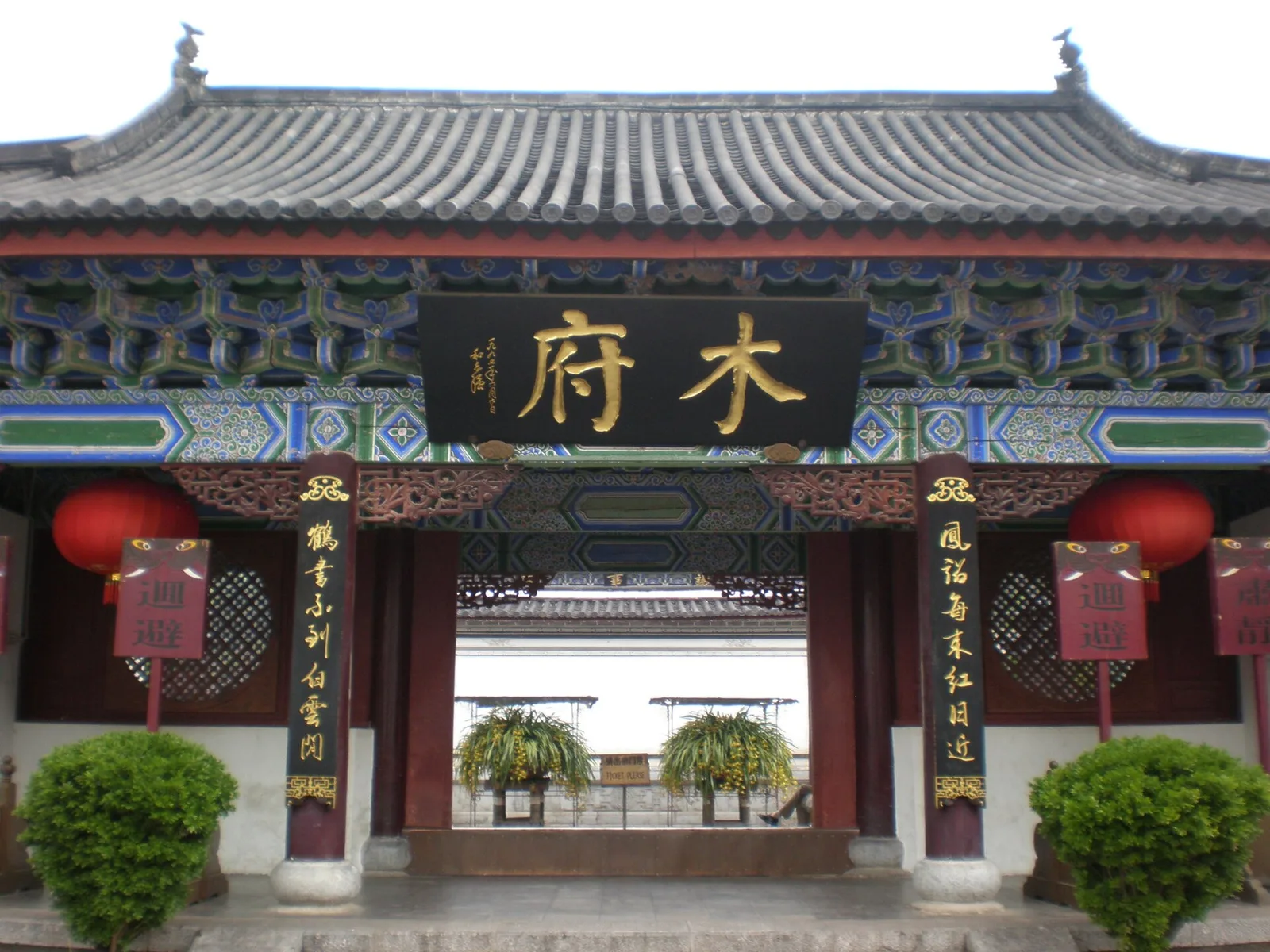
The Mu Palace sits at the western edge of the old town, a stepped complex of halls, courtyards, and gardens built on the site of the residence of the Mu chieftains. The Mu family governed Lijiang for roughly four and a half centuries, from the Yuan through the Qing, and their palace was the political centre of the basin. The current buildings are largely a reconstruction after the 1996 earthquake, which matters for how you read them.
In short
Visit for the scale, the courtyards, and the view from the rear terraces — not for original fabric. An hour is enough, and it pairs naturally with a climb to Lion Hill.
Before you book
Prices and schedules change
Reserve the fixed-time items first, then build the rest around the weather. If you are deciding between two versions of the trip, send both.
Who the Mu were
The Mu family were hereditary Naxi rulers installed under the Yuan and confirmed by later dynasties. Their power was unusual: a frontier house that survived successive Chinese dynasties by aligning early and administering the Tea Horse Road trade. Mu Zeng, the most famous of the line, expanded the palace and patronised Buddhism, learning, and the arts in the late Ming.
The family's story is the backdrop to most of Lijiang's surviving high culture, including some of the Baisha murals and the patronage networks behind Naxi music. The palace presents that story in halls with models, inscriptions, and a certain amount of reconstructed ceremony. Read it as a museum of power rather than a preserved home.
What you actually see
The complex is arranged along a rising axis: gate, ceremonial hall, rear halls, and garden terraces. The main hall has the broad roof and painted detail you expect from a Qing official residence, though the timber is modern. Several rooms display Naxi textiles, Dongba script, and documents. The gardens at the top are the most pleasant part and give a view back over the tiled roofs of the old town.
Because it was rebuilt, the palace can feel a little hollow to travellers who have seen older Chinese architecture. Its value is context. Visit after you have walked the old town, when the scale of the chieftain's compound makes sense against the modest courtyard houses below.
Visiting well
The palace is usually included in a combined ticket with Lion Hill and other old town sites, or sold separately. Prices and combinations change; confirm at the ticket office. Go early or late to avoid the tour groups, which arrive in a wave through the middle of the day.
The steps are steep and the altitude is 2,400 m. Take them slowly. Combine the palace with the climb to Lion Hill and Wangu Tower for the roofscape, then descend into the old town for lunch. For the broader dynastic story, the Mu family history goes deeper.
Verdict
A reconstructed palace with a real story: go for context and the upper garden, not for original timber.
Next in the manual
04 linksField desk / direct line
Not sure this fits your trip?
Send the dates, the group, and what you are deciding between. The field desk will tell you what to cut and what to keep.
Independent advice. No bookings, no commissions, no visa service.