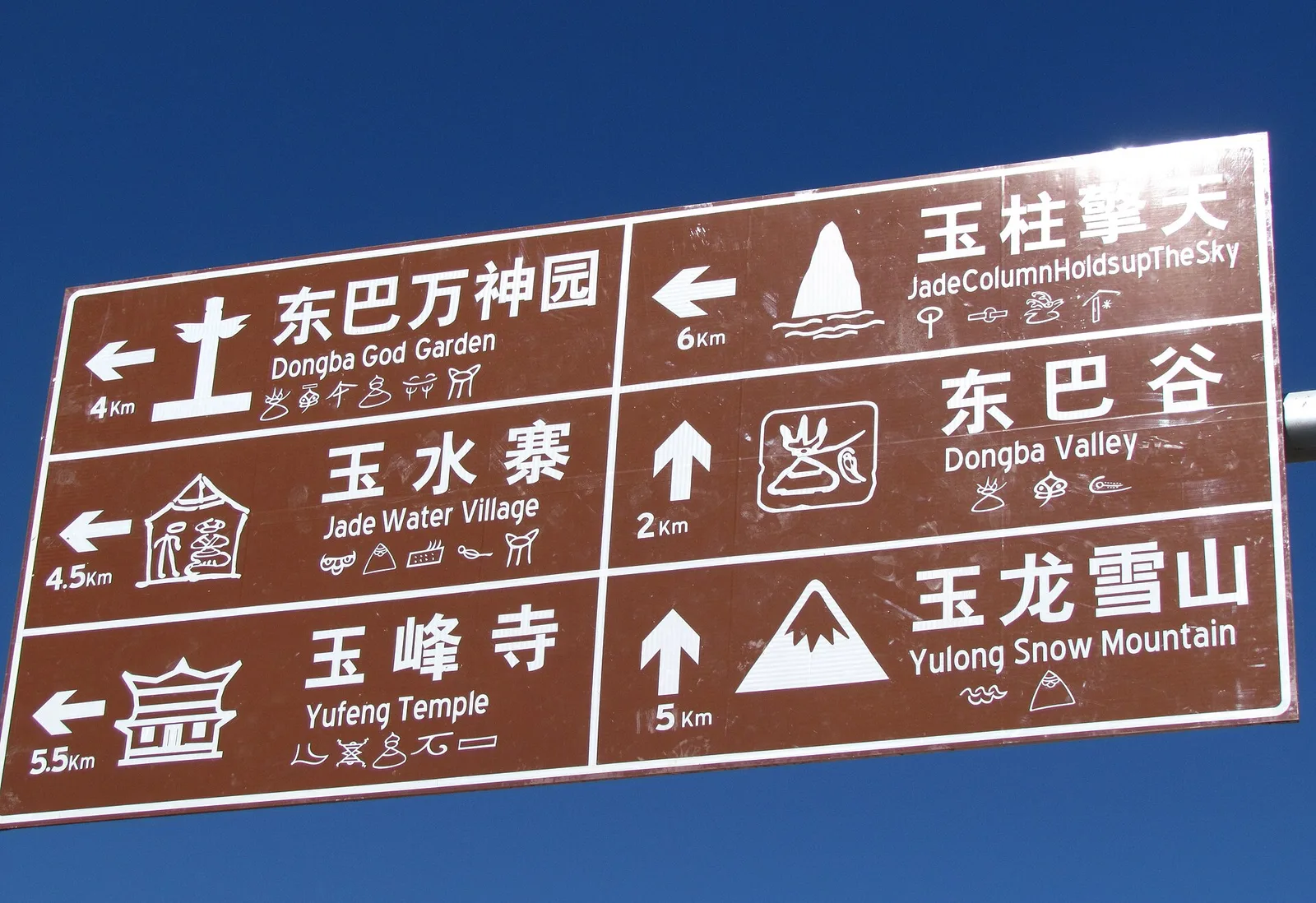
Dongba script is a pictographic writing system used by Naxi ritual specialists, the dongba, to record scripture, mythology, and ceremony. It is often called the last living pictographic script, though few people can read it fluently today. The characters are drawn, not alphabetised: a figure can stand for a word, a sound, or a whole idea.
In short
Dongba is a priestly script, not everyday writing. You will see it on temple walls, souvenirs, and museum labels; understanding what it is makes those signs worth a second look.
Before you book
Prices and schedules change
Reserve the fixed-time items first, then build the rest around the weather. If you are deciding between two versions of the trip, send both.
What it is
Dongba script, sometimes called Tomba, is a system of pictographs and ideographs used to write Naxi ritual language. A single glyph can represent an object, an action, or a phonetic value, and the same glyph can mean different things depending on context. It is not a simple picture alphabet.
The script is tied to the dongba priesthood and to the oral tradition. A dongba could read a text because he had memorised the chants and the stories behind the signs; the writing was a prompt, not a full transcription. That makes it hard to learn from a book.
Where to see it
The Dongba Culture Museum in Lijiang is the most serious place to see manuscripts, ritual objects, and explanations. Temple walls and older houses sometimes carry painted characters. Souvenir shops sell modern renderings on paper, cloth, and wood; these are decorative, not scripture.
The script also appears in the iconography of the old towns, sometimes accurately and sometimes as a design motif. If a guide offers to write your name in Dongba, treat it as a souvenir rather than a translation.
Why it matters
Dongba texts preserve Naxi cosmology: the creation story, the gods of sky and water, the migration routes of the clans, and the rules of ritual. They are one of the few written records of a Tibeto-Burman people's pre-modern world.
UNESCO added Dongba manuscripts to its Memory of the World register in 2003. The script is endangered because the ritual knowledge was passed orally and the priesthood shrank. Today, a small number of scholars and dongba keep it alive, and museums are the main public window.
For visitors, the practical point is that Dongba is a written ritual language, not a general-purpose script. A shop sign or a T-shirt is a modern design choice, however accurate the characters. The museum's manuscripts, by contrast, were made to be read aloud during ceremonies.
- Visit the Dongba Culture Museum for context.
- Treat souvenir script as decoration, not text.
- Do not photograph ritual objects without permission.
- The spoken Naxi language is separate from the script.
Verdict
Worth an hour at the museum; the script is the key to Naxi ritual life.
Next in the manual
04 linksField desk / direct line
Not sure this fits your trip?
Send the dates, the group, and what you are deciding between. The field desk will tell you what to cut and what to keep.
Independent advice. No bookings, no commissions, no visa service.