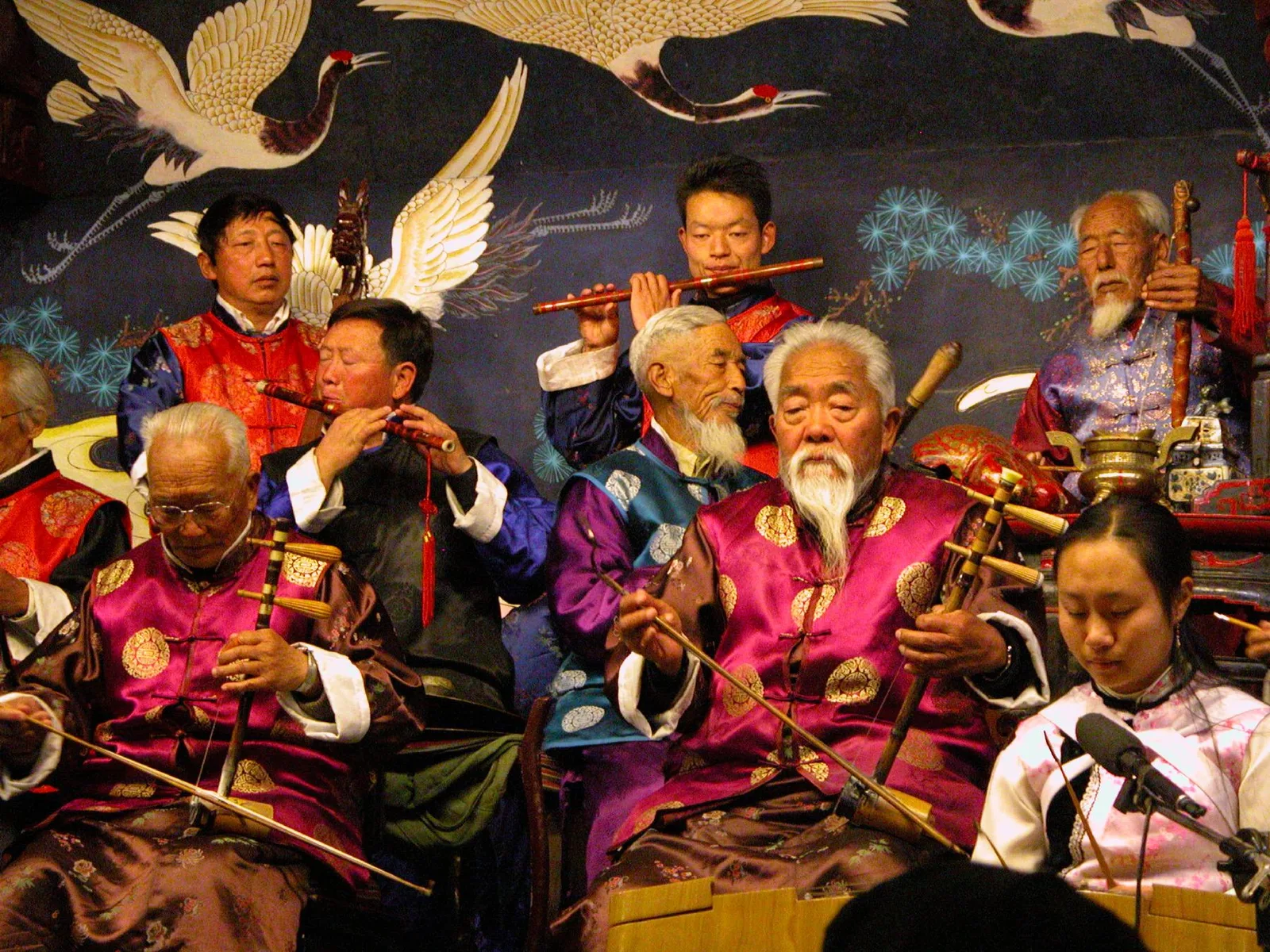
Naxi ancient music, often called Naxi gu yue, is an ensemble tradition preserved in Lijiang and played on instruments such as the pipa, erhu, dizi, and various percussion. It blends Taoist ritual music, Buddhist chant, and court music brought to Yunnan centuries ago. The performers are often elderly amateurs, and the sound is slow and formal.
In short
Concerts run in the old town most evenings; they are short, inexpensive, and worth an hour if you want a break from the lanes. Go with realistic expectations: this is a living amateur tradition, not a staged spectacle.
Before you book
Prices and schedules change
Reserve the fixed-time items first, then build the rest around the weather. If you are deciding between two versions of the trip, send both.
What you will hear
The repertoire includes pieces with names like 'Baisha Fine Music' and 'Dongjing Music', preserved by local amateur groups. The texture is heterophonic: instruments play variations of the same melody at once, with percussion marking the structure. It is not a virtuoso show; it is a ritual-derived sound.
The most famous group in Lijiang is associated with the old town and has performed abroad. Smaller ensembles play in courtyards and guesthouses. Quality varies; the setting matters as much as the playing.
Where to hear it
Concerts are advertised in the old town, at guesthouses, and at small theatres. Tickets are usually ¥80 to ¥160. The performances last about an hour and include explanations in Chinese, sometimes with English notes.
If you want a more intimate setting, ask your guesthouse about courtyard performances. These are less formal and often cheaper. Avoid any show that bills itself as a 'Naxi cultural extravaganza'; the real tradition is quieter than that.
How to listen
Go with an open mind and without expecting a symphony. The music is slow, repetitive, and modal; the pleasure is in the timbre and the interplay. Read the programme notes if they are available.
The performers are often older men who have played for decades. Applause is welcome, photography is usually allowed, and the halls are small. It is a good evening activity after a day on the mountain, when you want to sit still.
Listen for the percussion, which holds the structure together while the strings circle the melody. The pieces are long and unhurried; letting your attention drift is part of the experience. A short programme note helps, but the sound stands on its own.
- Book through your guesthouse or at the door.
- Arrive early for a good seat.
- Expect Chinese-language introductions.
- Combine with an early dinner in the old town.
Verdict
An hour well spent if you like old music; skip it if you want high production value.
Next in the manual
04 linksField desk / direct line
Not sure this fits your trip?
Send the dates, the group, and what you are deciding between. The field desk will tell you what to cut and what to keep.
Independent advice. No bookings, no commissions, no visa service.