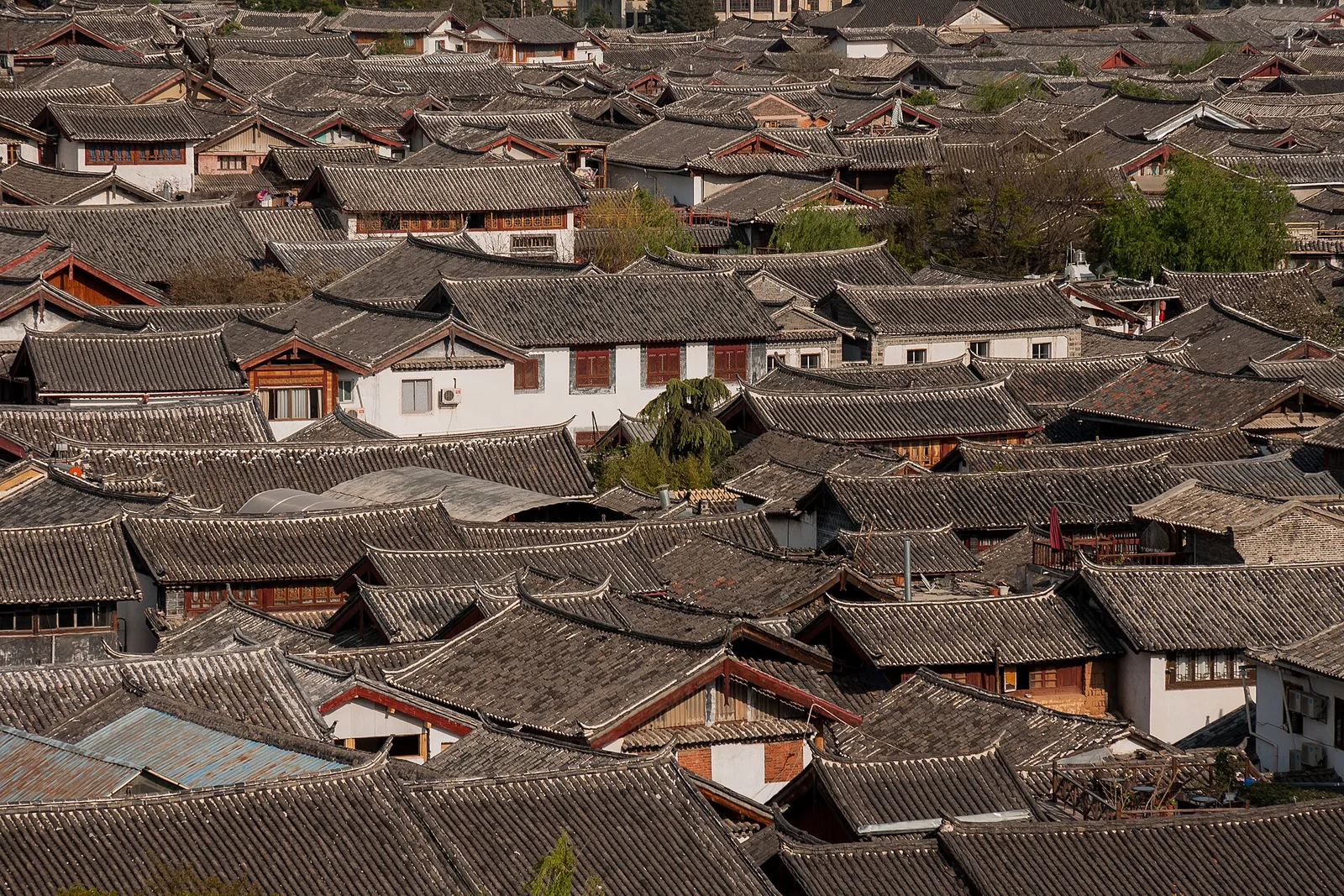
Lijiang Old Town, properly called Dayan, is the reason most people come. It is a compact grid of stone lanes, willow-lined canals, and Naxi courtyard houses tucked under Lion Hill. It is also one of China's most heavily visited historic towns, with a commercial core that runs from souvenir shops to loud bar streets. Both things are true. The skill is knowing which hours and which lanes belong to the place rather than the crowd.
In short
Stay inside or at the edge of Dayan for one or two nights, walk it before 08:30 and after 20:00, and use the quieter lanes north of Sifang Square. Treat the main commercial streets as a way in, not the destination.
Before you book
Prices and schedules change
Reserve the fixed-time items first, then build the rest around the weather. If you are deciding between two versions of the trip, send both.
What the old town is
Dayan was built by Naxi traders on the Tea Horse Road and has been the administrative heart of the Lijiang basin since the Yuan dynasty. The surviving town is a dense arrangement of wood-and-earth courtyard houses, stone-paved lanes, and a water system that still runs through the streets. It was inscribed by UNESCO in 1997 and rebuilt after the 1996 earthquake, which is why some of the timber looks younger than the layout.
The town has no single monument. Its pleasure is the grain of it: a canal turning beside a tea house, a courtyard gate left open, an old woman carrying vegetables through a crowd of tourists. The main lanes around Sifang Square are the most commercial. Ten minutes uphill or north, the shops thin out and the residential town begins.
The hours that decide the visit
Between about 10:00 and 19:00, the central lanes belong to tour groups, photographers in rented Naxi costume, and shops selling flower cakes and drums. It is not unpleasant, but it is not the town you came for. Go early. Before 08:30 the lanes are wet from cleaning, the shop shutters are down, and you can hear the canals.
Evening is the second window. After 20:00 the day-trippers leave, the bar street gets loud, and the quieter lanes become walkable again. If you stay overnight, do your wandering at these edges of the day and use the middle hours for the mountain, a museum, or a long lunch.
- 07:00–08:30: empty lanes, best photographs, breakfast stalls opening.
- 10:00–19:00: peak groups; good for services and shopping, not atmosphere.
- 20:00 onward: bar street noise, but the northern lanes quiet down.
Routes through the lanes
Start at the waterwheel and the main gate, then walk uphill rather than straight through Sifang Square. The lane to the Mu Palace climbs through some of the oldest surviving courtyard houses. Continue to Lion Hill for the roofscape, then descend north toward the quiet quarter around the Wenchang Palace. This half-loop takes two hours at an easy pace and avoids the worst of the retail corridor.
If you only have an afternoon, choose one axis: the canal lane from the waterwheel to Sifang Square, then the climb to the Mu Palace. Do not try to see every lane. The town is small enough that getting lost is part of it, but the stone underfoot is uneven and the altitude makes stairs feel longer than they look.
Fees, etiquette, and the tourist question
Walking into the old town is free. A maintenance fee of around ¥50 has been charged on and off at some entrances and is sometimes collected through hotels or included in attraction tickets; enforcement has varied for years. Ask your accommodation what is currently being asked, and keep any receipt. Do not pay a stranger at a lane entrance without a proper ticket window.
The old town is a lived-in place, not a film set. Keep voices down in residential lanes, ask before photographing people, and do not walk into private courtyards. If you want the quieter version of the same architecture, Shuhe is eight kilometres northwest and considerably calmer. For the commercialisation argument in full, read the field note on what tourism changed.
The route
- 01
07:15
Enter from the north
Start above the waterwheel and walk downhill through the residential lanes before the shops open.
- 02
08:30
Breakfast
Naxi baba and soy milk at a stall off the main square. Sit inside; the altitude makes everything slower.
- 03
10:00
Mu Palace
Climb through the old lanes to the Mu family residence, then continue to Lion Hill for the roof view.
- 04
13:00
Long lunch
Leave the core for the new town or a courtyard restaurant. Rest during the busiest hours.
- 05
20:00
Evening walk
Return for the canals after dark, keeping to the northern lanes away from the bar street.
Verdict
Stay overnight, walk it early and late, and treat the middle of the day as somewhere else.
Next in the manual
04 linksField desk / direct line
Not sure this fits your trip?
Send the dates, the group, and what you are deciding between. The field desk will tell you what to cut and what to keep.
Independent advice. No bookings, no commissions, no visa service.