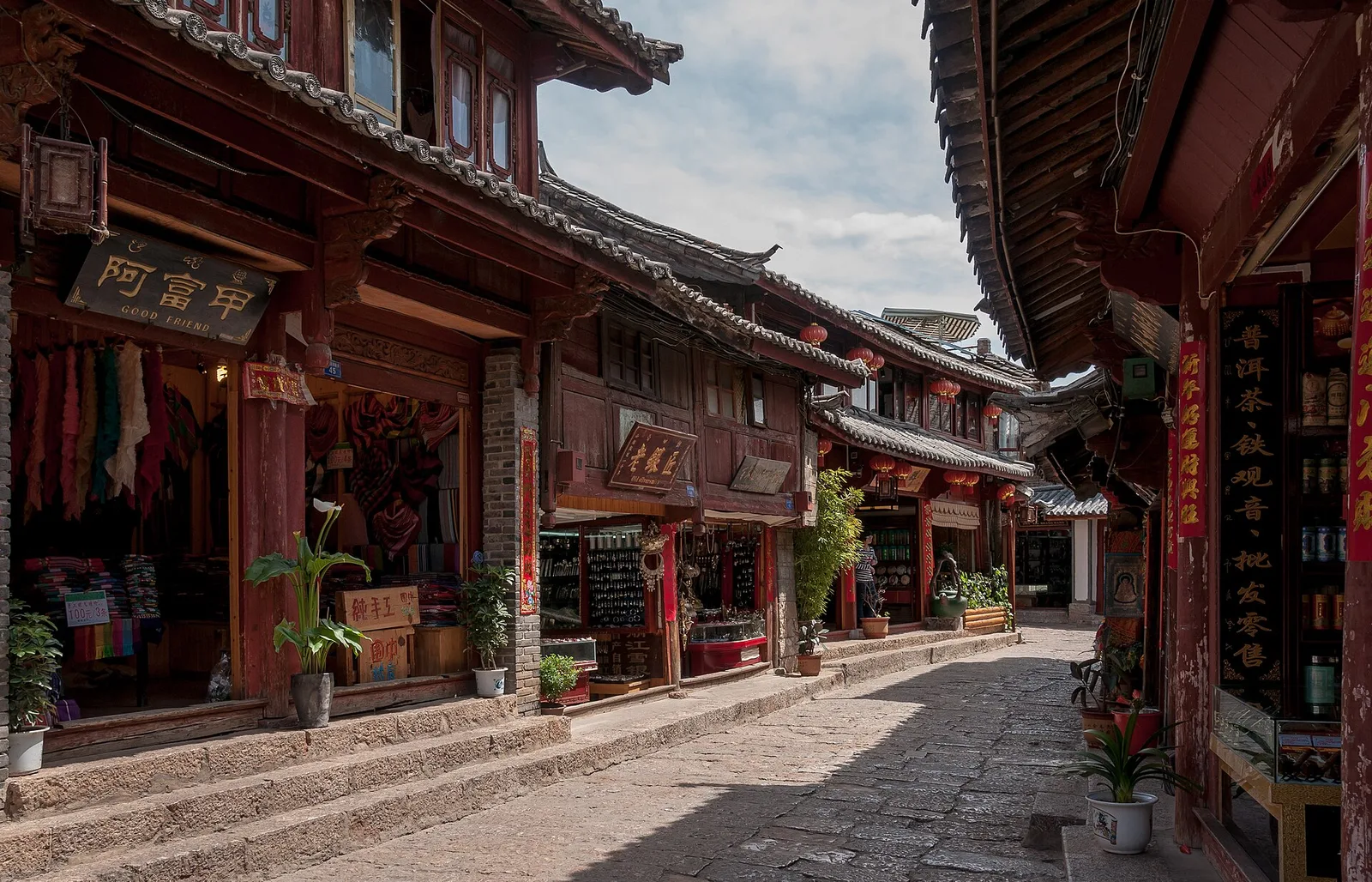
Lijiang's old town is one of China's most visited places, and it looks it: souvenir shops, photo studios, bars, and guesthouses in restored courtyards. The commercialisation is real, and it has changed who lives in the centre and what the streets are for. It is also more complicated than the usual lament.
In short
The old town is commercialised, but the basin around it is not. Stay in Shuhe or Baisha, walk the side lanes, and visit the market to see the parts tourism has not swallowed. Do not expect an untouched village.
What changed
The old town's economy shifted from trade and crafts to tourism. Courtyard houses became guesthouses, shops, and bars. Rents rose, and some long-term residents moved out of the centre. The streets that once served locals now serve visitors, especially along the main axes.
The restoration of the old town after the 1996 earthquake accelerated this. Rebuilding brought money and attention, but it also standardised the look and raised property values. The result is beautiful and somewhat hollowed out.
The pandemic years changed the mix again. Some businesses closed, others consolidated, and domestic tourism returned stronger than before. The old town now serves a mostly Chinese visitor economy, with international travellers a small and seasonal share.
What remains
The side lanes still have residents, small shops, and schools. The morning market is a working market. Baisha and Shuhe are quieter, and the villages around the basin still farm. The Naxi language, music, and rituals continue, though under pressure.
The commercialisation is not evenly spread. Step one street off the main axis and the noise drops. Stay overnight rather than day-tripping, and the town changes again after the buses leave.
How to travel here
Do not come looking for an untouched ancient town. Come for a living place that is also a tourist economy, and choose where you spend your time and money. Buy from local businesses, eat where locals eat, and visit the villages.
The where to stay guide explains the trade-offs. The local life section shows what to look for. If you want quiet, go to Baisha and stay the night.
- Stay overnight, not on a day trip.
- Spend in local businesses.
- Walk the side lanes.
- Visit Baisha and Shuhe.
Verdict
Commercialised, yes; empty, no. Choose your lanes and your hours.
Next in the manual
04 linksField desk / direct line
Not sure this fits your trip?
Send the dates, the group, and what you are deciding between. The field desk will tell you what to cut and what to keep.
Independent advice. No bookings, no commissions, no visa service.