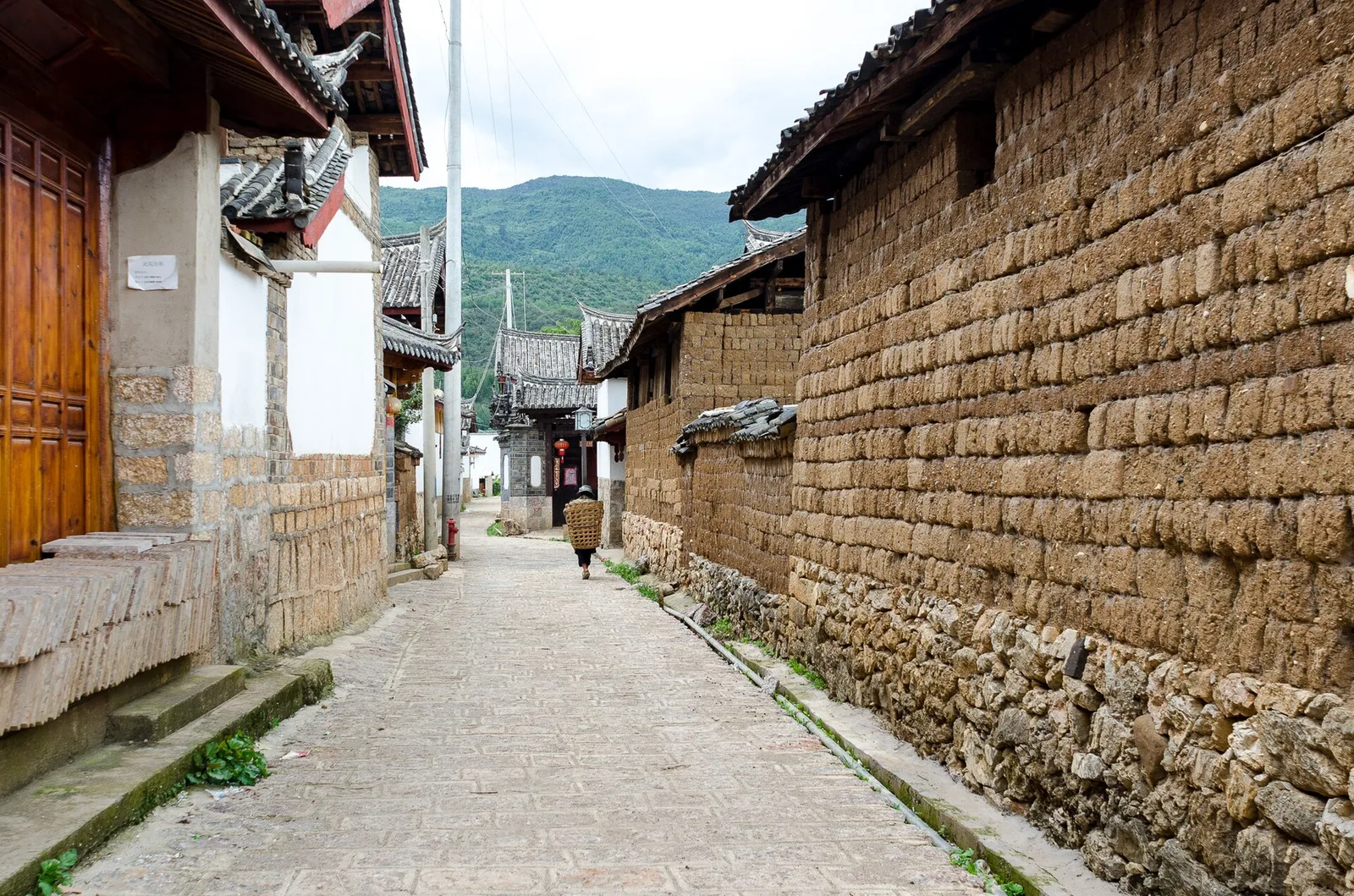
Baisha lies about ten kilometres north of Lijiang, at the foot of the mountain, and was the political centre of the Naxi before the Mu family moved their seat to Dayan. Its fame rests on a set of Ming dynasty murals, but the town itself is the attraction: a long, low main street, mud-brick houses, fields at the edges, and far fewer visitors than Dayan or Shuhe.
In short
Come for the murals and the village pace. Give it half a day, combine it with Yuhu, and go in the morning when the light is soft and the tour buses have not arrived.
Before you book
Prices and schedules change
Reserve the fixed-time items first, then build the rest around the weather. If you are deciding between two versions of the trip, send both.
The murals
Baisha's murals were painted between the 15th and 17th centuries under the patronage of the Mu family and local religious houses. They blend Tibetan Buddhist, Han Buddhist, Taoist, and Naxi Dongba imagery — a visual record of a frontier town where several religious worlds overlapped. The largest group is in Dabaoji Palace, with others in the Liuli Hall and nearby temples.
The murals are fragile and often dimly lit; photography is usually restricted, and flash is not allowed. Check opening hours before you go, as some halls close for conservation or for the off-season. The Baisha murals guide explains what you are looking at and why the mixture matters.
The town
Baisha's main street is one of the most pleasant in the Lijiang basin: low wooden shopfronts, a few coffee shops run by outsiders, embroidery workshops, and old men playing cards in the shade. It is not a museum village; people live here, and the fields begin abruptly at the end of the lane.
Allow time to wander the side streets and the edge of the fields. In summer the crops are green and the mountain is often clouded; in autumn the light is clearer and the harvest drying on the roofs adds colour. The town is small enough to see in two hours, but the point is to slow down.
Getting there and combining visits
Baisha is a 20- to 30-minute drive from Dayan, or a short taxi from Shuhe. Public buses run from Lijiang's northern bus station, but schedules are thin; a taxi or a hired car for the day is easier if you are also visiting Yuhu. Many travellers combine Baisha, Yuhu, and Jade Dragon in one loop, though that makes for a long day.
There is no major entry fee for the town itself; the mural halls charge a small ticket. Bring cash for small stalls and expect simple toilets. The altitude is around 2,500 m, slightly higher than Dayan. For the village at the mountain's foot, continue to Yuhu.
Verdict
The best village half-day in the basin: murals, a real main street, and room to breathe.
Next in the manual
04 linksField desk / direct line
Not sure this fits your trip?
Send the dates, the group, and what you are deciding between. The field desk will tell you what to cut and what to keep.
Independent advice. No bookings, no commissions, no visa service.