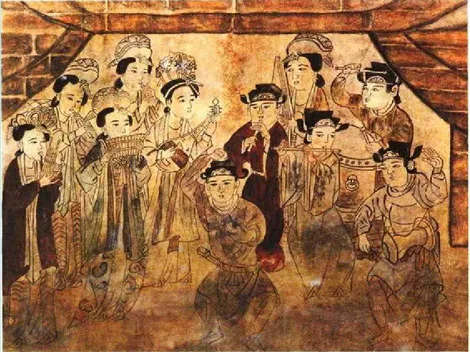
The Baisha murals are a group of Ming dynasty religious paintings in the temples around Baisha village, north of Lijiang. They blend Tibetan Buddhist, Chinese Taoist, and Naxi themes in a single composition, which is unusual and historically revealing. The most accessible are in Dabaoji Palace and Liuli Hall.
In short
Allow an hour for the murals and the village. The paintings are faded and protected; do not expect bright colour. Go in the morning and combine with Baisha's streets and embroidery workshops.
Before you book
Prices and schedules change
Reserve the fixed-time items first, then build the rest around the weather. If you are deciding between two versions of the trip, send both.
What they show
The murals depict Buddhist deities, Taoist figures, and local motifs in dense compositions. The style shows Tibetan influence in the mandorlas and colours, Chinese influence in the brushwork and clothing, and Naxi influence in the choice of subjects and patrons. They are evidence of a border region where religious traditions overlapped.
The paintings are old and fragile. Many have been restored or stabilised, and some are behind glass. The colours are muted compared with what they would have been, so look for the composition and the details rather than the brightness.
Where to see them
Dabaoji Palace, in Baisha village, has the largest and most famous murals. Liuli Hall, nearby, has another set. Both are small temples with courtyards; the guardians may need to unlock doors for specific halls, so ask politely.
Entry is usually a small fee, sometimes combined with the village. The temples are active religious sites; keep your voice down and do not use flash. The Baisha old town guide covers the rest of the village. Mornings are quietest and the light is best.
Context
The murals were commissioned in the Ming period, when Lijiang's Mu chieftains were consolidating power and patronising religious institutions. The mix of traditions reflects the family's diplomatic and cultural strategy as much as local belief.
Conservation is ongoing. Some halls may be closed for restoration, and photography rules vary. Check locally before you plan a special trip. The Mu family guide explains the patrons.
Give your eyes time to adjust. The halls are dim, and the figures emerge slowly from the plaster. A small torch is more useful than a flash, and a guide who knows the iconography will turn a faded wall into a readable scene.
- No flash; some halls ban photography.
- Ask before entering locked halls.
- Combine with Baisha's lanes and workshops.
- Check restoration closures locally.
Verdict
A quiet, scholarly hour; go for the history, not for spectacle.
Next in the manual
04 linksField desk / direct line
Not sure this fits your trip?
Send the dates, the group, and what you are deciding between. The field desk will tell you what to cut and what to keep.
Independent advice. No bookings, no commissions, no visa service.