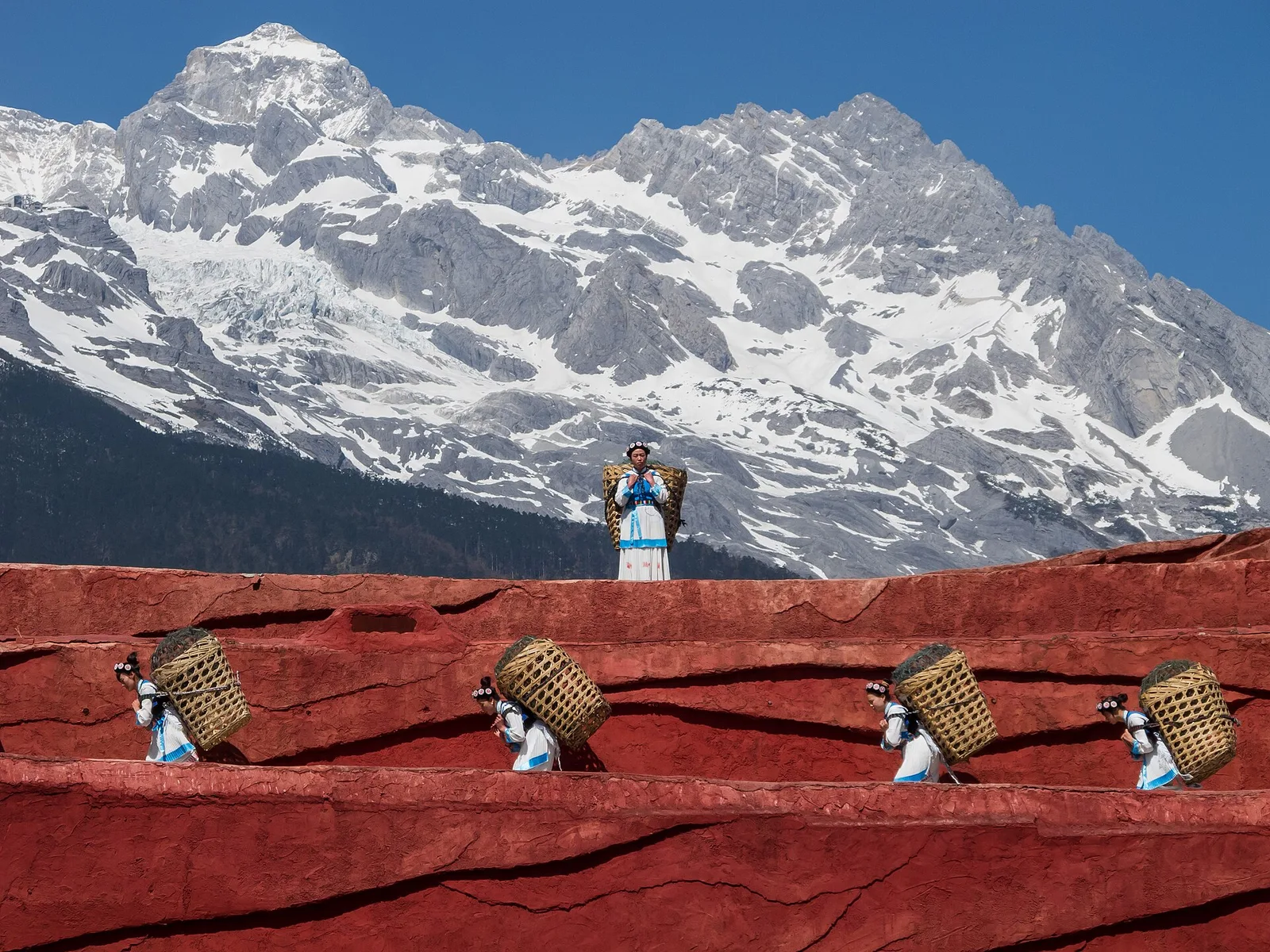
Naxi women are visible in Lijiang in a way that Naxi men often are not: running shops, guiding tours, farming the basin, and wearing the distinctive sheepskin cape with seven embroidered circles. The dress is not a costume for tourists, though it is often worn for them. It carries a cosmology of stars and labour.
In short
The cape's seven circles represent stars, and the two larger circles the sun and moon. The outfit is everyday workwear for many older women and ceremonial dress for younger ones. Ask before photographing.
Before you book
Prices and schedules change
Reserve the fixed-time items first, then build the rest around the weather. If you are deciding between two versions of the trip, send both.
The dress
The classic Naxi woman's outfit includes a blue or black jacket, wide trousers, an apron, and a sheepskin cape worn over the back. The cape is decorated with seven embroidered circles representing stars, plus larger circles for the sun and moon. The whole design is often read as 'the stars and moon on my back, the labour of the day ahead'.
Older women in the villages still wear the cape daily. Younger women wear it for festivals, performances, and tourism work. In the old towns, you will see it in souvenir photos and dance shows, which can make it feel like a costume; it is not.
Work and family
Naxi society is traditionally patrilineal, with inheritance passing through sons. Women have historically done much of the agricultural and commercial work, and in Lijiang they dominate small retail and hospitality. That visible role is often mistaken for matriliny.
The Mosuo, who live around Lugu Lake, are matrilineal and have a different family system, sometimes described as walking marriage. They are a distinct group, not a subset of the Naxi, though they live in the same region. The Lugu Lake guide explains more.
Etiquette
Ask before photographing anyone, especially older women in traditional dress. A polite request in Mandarin or a gesture usually works; a camera in someone's face does not. If you buy something from a stall, a short conversation is welcome.
Do not call the dress a costume or assume it is worn for tourists. It is clothing with meaning. If you are invited to a festival or a village meal, follow your host's lead on dress and photographs.
The cape is heavy and warm, which explains its survival in a high, windy basin. The embroidery takes time, and good pieces are repaired rather than replaced. If you buy textiles, ask who made them and whether the work is hand-stitched.
- Ask before taking portraits.
- The seven circles are stars, not decoration.
- Mosuo and Naxi are different peoples.
- Buy from the stall before asking for a photo.
Verdict
Look closely at the cape; it encodes a whole cosmology, not just a pattern.
Next in the manual
04 linksField desk / direct line
Not sure this fits your trip?
Send the dates, the group, and what you are deciding between. The field desk will tell you what to cut and what to keep.
Independent advice. No bookings, no commissions, no visa service.