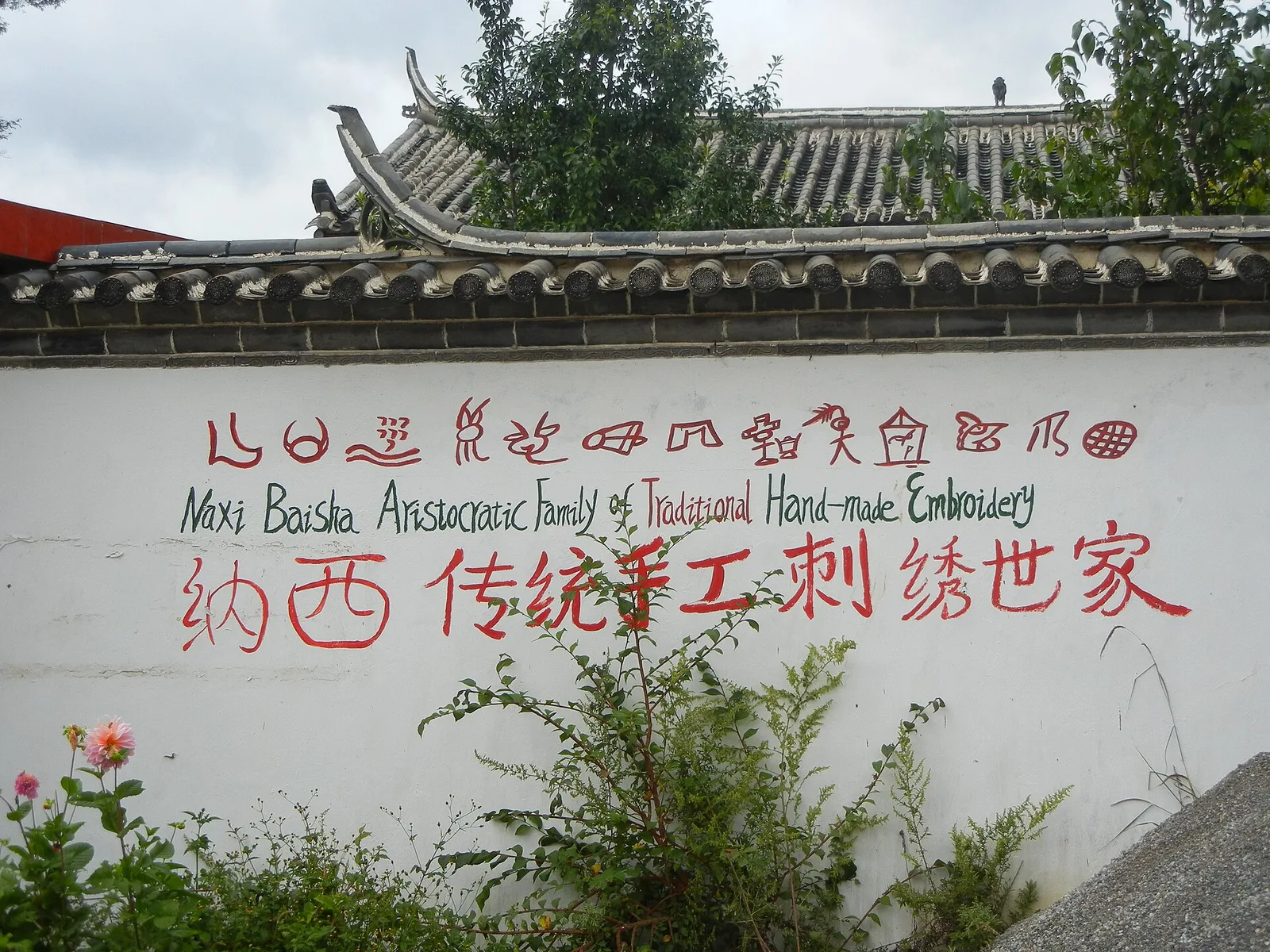
Naxi embroidery is easy to mistake for generic souvenir needlework until you see the old pieces. The best work is dense, figurative, and specific to the valley: peonies, magpies, butterflies, and mountain plants stitched onto aprons, baby carriers, and wall hangings. In Baisha you can sit with a maker for a morning and learn how the stitches are built.
In short
Choose a workshop attached to a working studio, not a shop with a loom in the window. Two to three hours is enough for a small sampler; prices usually run ¥120 to ¥300.
Before you book
Prices and schedules change
Reserve the fixed-time items first, then build the rest around the weather. If you are deciding between two versions of the trip, send both.
Why Naxi embroidery is different
The tradition is associated with Naxi women, who ran much of the household economy in the Lijiang basin. Embroidery was not a hobby: it marked status, celebrated births and marriages, and could be sold. The patterns drew on Chinese, Tibetan, and local motifs, which is why a single piece can look like several traditions at once.
The older pieces in museums are worth studying before you stitch. Look at the density of the fill, the way outlines are used, and the slight asymmetry that comes from working without a printed pattern. A good teacher will show you the difference between the machine-made embroideries sold on the main lanes and the hand-worked pieces in the back rooms.
How a beginner session runs
Most workshops start with a simple motif: a flower, a bird, or a small geometric border. You transfer or draw the outline, learn two or three stitches, and work a sampler. The point is not to finish a masterpiece. It is to understand how slowly the cloth builds up and why the old pieces cost what they do.
Teachers vary in English. Some explain in fluent English; others demonstrate and use a translation app. Both can work. What matters is that the teacher sits with you, corrects your tension, and lets you handle old pieces rather than only looking at them behind glass.
Where to go in Baisha
Baisha's main street has several embroidery shops, but the more interesting studios are on the side lanes and in family courtyards. Look for a workshop with several women working together, a stack of old patterns, and a table where you can sit. Avoid any place where the pitch begins with a fixed package and a stop at a jewellery counter.
If you are also visiting the Baisha murals, do the embroidery first. The murals give you the iconography; the stitching gives you the patience behind it.
Buying versus making
A small hand-worked piece can take days, so the prices in a serious studio are not unreasonable. Ask who made it, how long it took, and whether the dye is natural. If the seller cannot answer, treat it as decorative textile rather than a collectible.
If you make a sampler, do not expect it to look like the display pieces. The value is in the attempt. Carry it flat; the cloth creases easily and the stitches can snag in a suitcase.
Verdict
A quiet, useful counterweight to the old town's costume-photo economy. Best for travellers who want to make something rather than buy it.
Next in the manual
03 linksField desk / direct line
Not sure this fits your trip?
Send the dates, the group, and what you are deciding between. The field desk will tell you what to cut and what to keep.
Independent advice. No bookings, no commissions, no visa service.