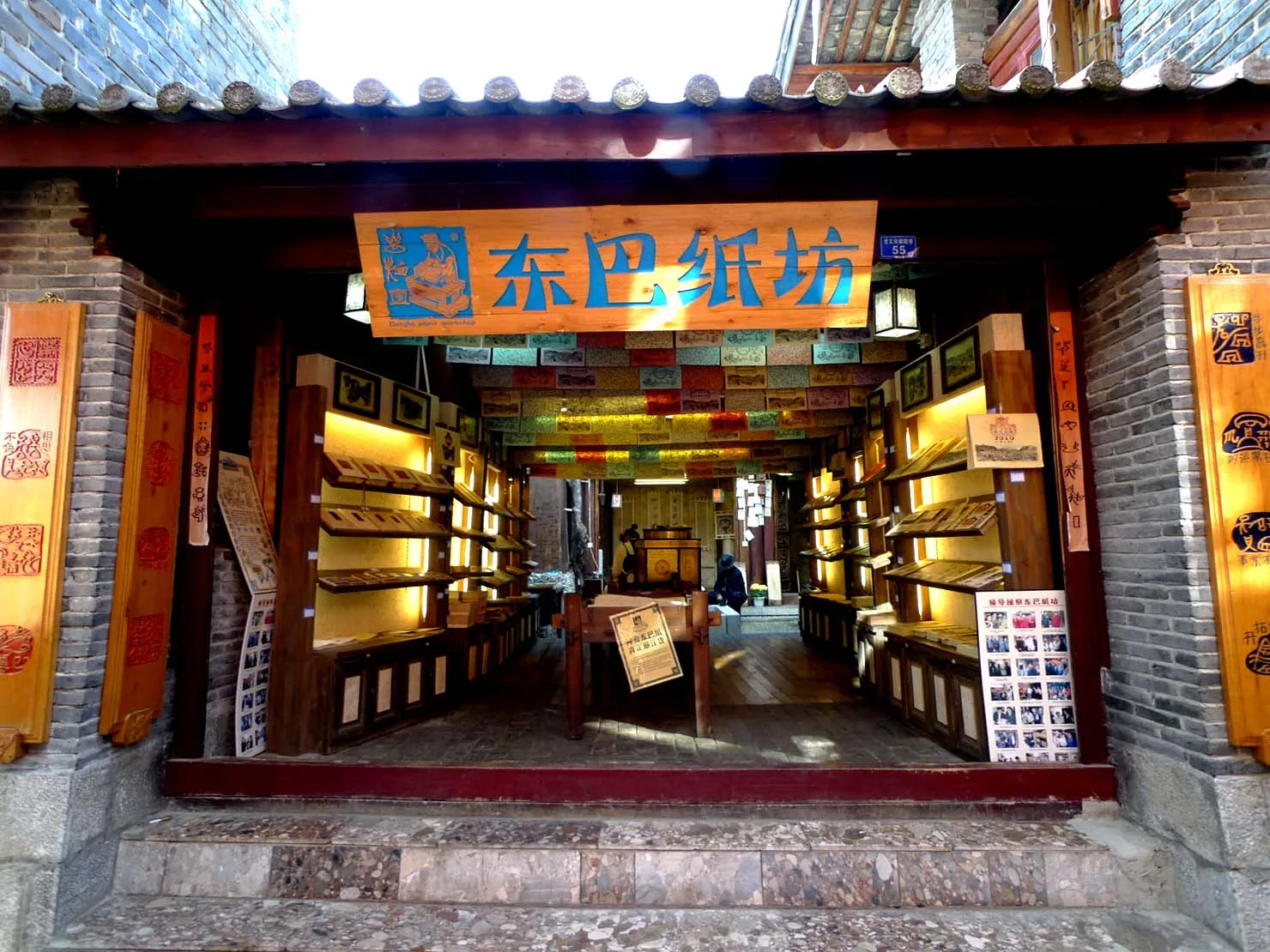
Dongba paper is not a souvenir prop. It is a tough, fibre-rich sheet made from the bark of a local shrub, and it is the reason many Dongba manuscripts have survived for centuries. A short workshop in Baisha or the old town lets you make one sheet yourself, and it changes how you look at every scroll and painting in the museums.
In short
Book a small workshop rather than a stage demonstration. Expect 1.5 to 2 hours, ¥80 to ¥180, and a wet sheet you may need to collect later or carry carefully.
Before you book
Prices and schedules change
Reserve the fixed-time items first, then build the rest around the weather. If you are deciding between two versions of the trip, send both.
Why this one is worth the time
Most craft experiences in Lijiang are demonstrations with a cash register at the exit. Papermaking is different: the process is slow, physical, and hard to fake. You tear bark, boil and pound the fibres, spread them in a vat of water, and lift a screen to form the sheet. The result is uneven, textured, and obviously made by hand.
It also gives you a way into Dongba culture that does not depend on reading a script you cannot read. Once you have handled the paper, the manuscripts in the museums look less like mysterious decoration and more like practical objects made for a specific landscape.
What actually happens
A good workshop starts with the raw fibre, not a bowl of ready-made pulp. The instructor explains which shrub is used, why the bark is harvested in a particular season, and why the paper is dark, coarse, and strong. Then you work through the stages yourself, with help where the screen needs a steady hand.
The sheet is pressed and left to dry. In dry weather it may be ready the same day; in the rainy season it can take longer. Ask before you start whether you will carry it wet, collect it later, or have it posted. International postage is possible but slow, and the sheet may need stiff backing to survive the trip.
Where to find a real workshop
Baisha has several small workshops attached to family houses, and the old town has a few studios that are more visitor-facing. The best ones are quiet, smell of wet fibre, and have drying racks in the yard. If the whole experience happens in a brightly lit showroom with no water, keep walking.
Ask at your guesthouse for a workshop where you will make a sheet rather than watch someone else make one. A group of two to six people is ideal. Larger groups turn the session into a queue for the screen.
What to ask before you book
Confirm the price includes materials, the sheet, and drying. Ask how long the workshop lasts and whether you can take the paper with you that day. If you want to try Dongba writing or printing as well, ask whether that is a separate session; some studios combine papermaking with a short brush and ink lesson.
Wear clothes you do not mind splashing. The fibre stains, and the water is cold for much of the year. Bring a plastic folder if you are carrying a damp sheet.
Verdict
One of the few Lijiang craft experiences that is genuinely about the craft. Do it before the museum, not after.
Next in the manual
03 linksField desk / direct line
Not sure this fits your trip?
Send the dates, the group, and what you are deciding between. The field desk will tell you what to cut and what to keep.
Independent advice. No bookings, no commissions, no visa service.