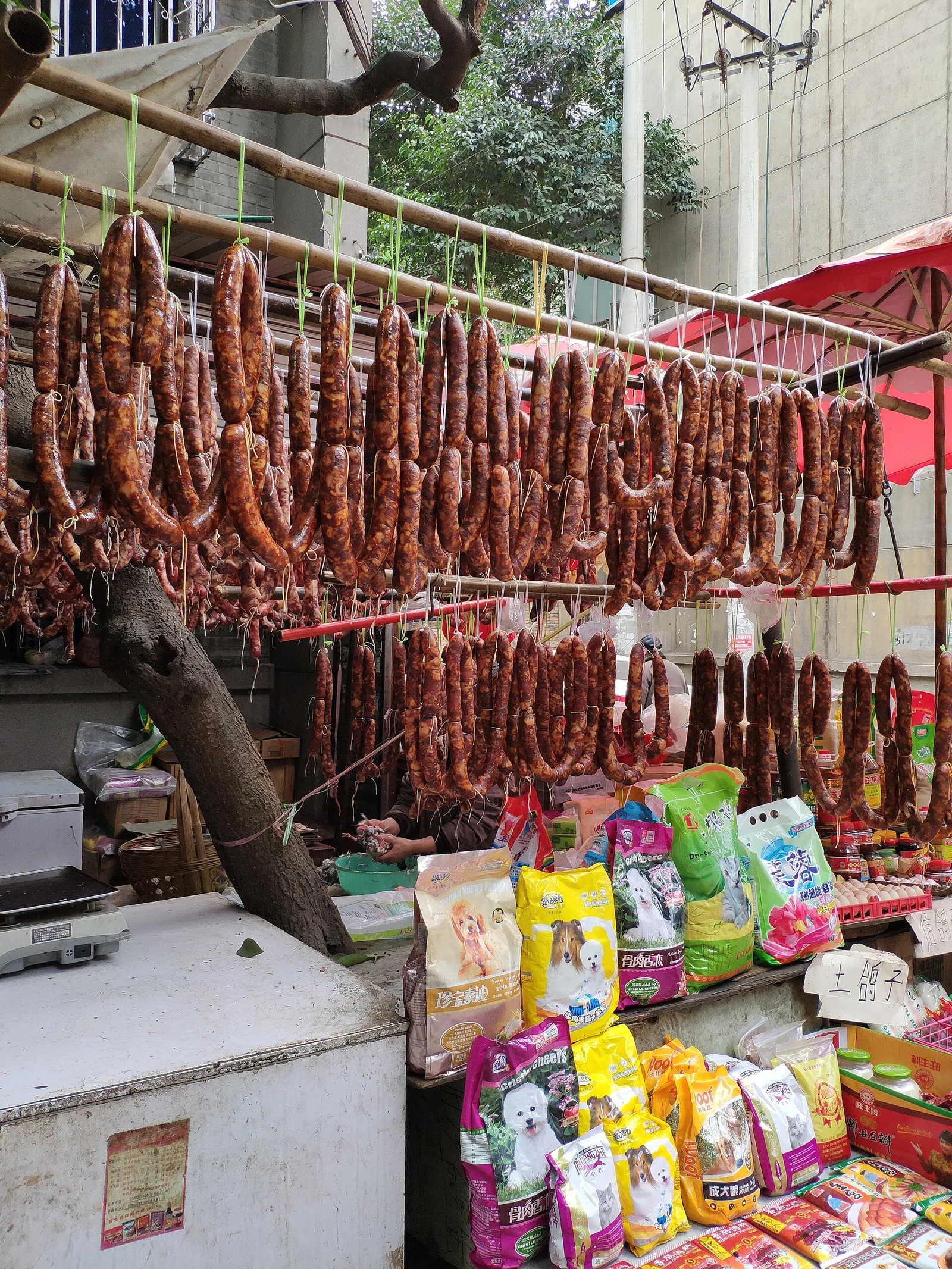
Cured pork is central to Naxi home cooking. In late autumn and winter, families salt and air-dry ribs and joints, hanging them above the hearth or in a cold room. The meat is then stewed with potatoes, dried beans, or vegetables into a rich, smoky broth. It is the opposite of delicate cuisine, and it is deeply satisfying in cold weather.
In short
Order it in winter, in a family-style restaurant, and share a pot. The best versions are stewed slowly and served with rice and a sharp pickle.
How it is made
Pork ribs are rubbed with salt, sometimes with Sichuan pepper and rice wine, and left to cure. They are then hung in a cold, dry place, often above a wood stove, for several weeks. The result is firm, salty, and smoky, with a concentrated pork flavour that fresh meat cannot match.
The cooking is simple: soak the ribs to remove excess salt, then stew them slowly with potatoes, dried beans, or radish. The broth turns milky and rich. Some kitchens add chili or pickled vegetables for acidity. It is a winter dish, designed to use preserved food and warm a house.
Where to eat it
Look for family-run Naxi restaurants outside the main tourist lanes, or in villages such as Baisha and Shuhe. The dish is usually served as a shared pot with rice and a few side dishes. Prices are moderate, and portions are large.
In the old town, some restaurants serve a tourist version that is lighter and less salty. Ask whether the ribs are house-cured. If you are vegetarian, avoid the broth; it is the essence of the dish. The Naxi everyday life guide explains the preserving calendar.
What to drink
Tea is the traditional accompaniment, or a local rice wine in small quantities. The salt and smoke handle a light spirit better than a heavy red wine. If you are at altitude, go easy on alcohol; it dehydrates and worsens headaches.
Finish with something fresh — a plate of greens or a rose cake — to cut the richness. In summer, the dish is less common because curing weather is wrong; order it in the cooler months for the best version.
Verdict
Winter comfort food with real depth: share a pot in a family restaurant and skip the tourist version.
Next in the manual
04 linksField desk / direct line
Not sure this fits your trip?
Send the dates, the group, and what you are deciding between. The field desk will tell you what to cut and what to keep.
Independent advice. No bookings, no commissions, no visa service.