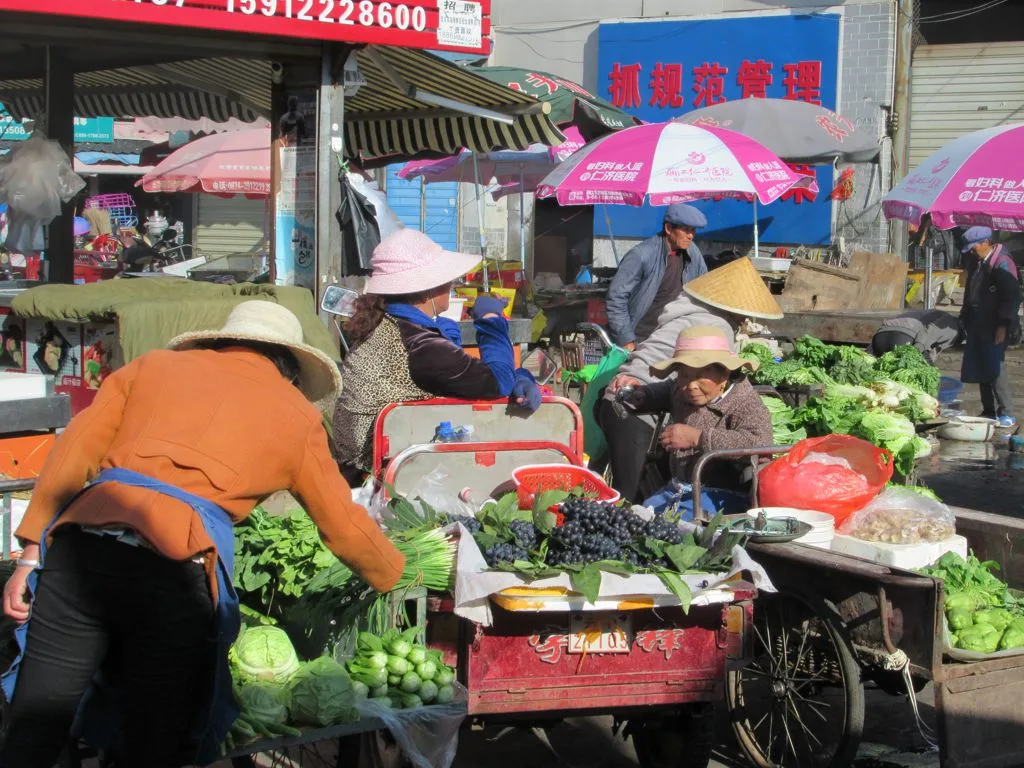
A cooking class is only as good as its market. The useful version starts at 08:00 with a basket and a local cook, moves through the vegetable stalls and the cured-meat counter, and ends in a courtyard kitchen where you learn why Naxi food is salty, sour, and built for cold nights. It is also the easiest way to understand what you have been eating.
In short
Look for a class that includes the market and a maximum of six people. Expect three to four hours and ¥180 to ¥350; ask about dietary needs before you book.
Before you book
Prices and schedules change
Reserve the fixed-time items first, then build the rest around the weather. If you are deciding between two versions of the trip, send both.
Why start at the market
Lijiang's food is seasonal in a way restaurant menus hide. In summer the stalls fill with wild mushrooms, ferns, and green walnuts; in winter the vegetables shrink to roots, cabbages, and dried goods, and the cured pork comes into its own. Walking the market with a cook explains more about the local diet than any menu.
The market is also where you learn the difference between the tourist-facing displays and the produce locals actually buy. Your teacher will point out which mushrooms are safe, which greens need long cooking, and why the price of matsutake can double in a week.
What you will cook
Most classes cover three or four dishes: Naxi baba, a layered flatbread; a cured pork dish with vegetables; a wild-green or mushroom dish in season; and a simple soup or cold dish. The exact menu changes with the market. If you are vegetarian, say so at booking; Naxi cooking uses pork fat and cured meat generously, and substitutions need planning.
You will do the work: knead, roll, chop, and manage a wok over a hot fire. The teacher will step in when the heat or timing matters. The meal at the end is usually eaten together with rice and tea, and it is often the best lunch of the trip.
Choosing a class
A good class is small, includes the market, and takes place in a real kitchen rather than a demonstration studio. Ask how many people will be cooking, whether the market visit is included, and whether the price covers ingredients and the meal. Classes attached to guesthouses are often better value than the polished old-town operations.
Check the language of instruction. Some classes are hands-on with English commentary; others are demonstration-style with a translator. Neither is wrong, but the hands-on version is more useful if you actually want to cook the dishes at home.
What to skip
Skip any class that promises a 'Naxi banquet' in ninety minutes with no market visit. It is likely a cooking demonstration with a photo stop. Also be cautious with wild mushroom classes in summer: even local cooks are careful, and a class should teach you the safety rules rather than just the romance of foraging.
If you have allergies or a sensitive stomach, be conservative. The food is not especially spicy by Chinese standards, but it is rich, salty, and often cooked with preserved ingredients.
Verdict
The best half-day introduction to Naxi daily life. Book it early in the trip so the market vocabulary stays with you.
Next in the manual
03 linksField desk / direct line
Not sure this fits your trip?
Send the dates, the group, and what you are deciding between. The field desk will tell you what to cut and what to keep.
Independent advice. No bookings, no commissions, no visa service.